

Digital trust in banking is becoming increasingly critical as financial institutions accelerate digital payments, AI adoption, and connected financial services. In 2025, digital payments accounted for 64.7% of total retail payment volume in the Philippines¹, while social engineering, account takeover, and identity theft accounted for 76% of financial fraud losses monitored by the BSP in the first half of the year².
Against this backdrop, Exist Software Labs, in partnership with SEON, AWS and VST-ECS Phils., brought together C-suite executives, risk and compliance officers, and technology leaders from the Philippine banking and fintech sectors for The Digital Trust Forum 2026 on September 16.
The forum explored a central question: How can financial institutions innovate at speed while maintaining security, compliance, and customer trust?
The discussions pointed to one answer: digital trust must be built into the architecture, governance, and operations of modern financial institutions.
Building Trusted Speed Into Banking Architecture
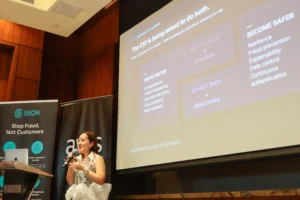
Opening the forum, Jemelyn Ambrosio highlighted the growing pressure on banks to deploy AI-enabled digital services while maintaining strong fraud prevention, data governance, and regulatory controls.
The concept of Trusted Speed emerged as a key theme. Rather than treating speed and security as competing priorities, financial institutions can build security and compliance directly into their technology architecture.
One way to achieve this is by moving risk to the left, bringing risk and compliance teams into product design earlier instead of treating them as final-stage checkpoints.
The discussion also highlighted the value of protecting existing core banking systems while accelerating innovation at the edge. API-driven trust layers can enable capabilities such as real-time fraud detection and AI-powered services without requiring a complete replacement of foundational banking systems.
Strengthening Fraud Prevention With AI and Human Oversight
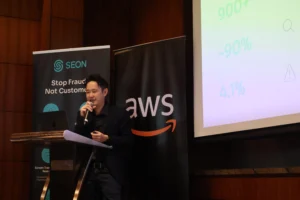
SEON addressed another major challenge facing financial institutions: alert fatigue.
Large volumes of fraud alerts can overwhelm risk teams, particularly when conventional rules generate significant false positives. Combining auditable rules with machine learning and real-time risk scoring can help prioritize higher-risk activity while reducing unnecessary investigations.
The forum emphasized that AI should not replace human judgment. Instead, AI can act as an operational companion, analyzing behavioral patterns, device intelligence, transaction activity, and other signals so analysts can make faster and more informed decisions.
This human-in-the-loop approach is increasingly important as fraudsters use sophisticated techniques, including AI-enabled phishing and synthetic identities.
↗Know more about our partnership with SEON
Data Sovereignty and Responsible AI
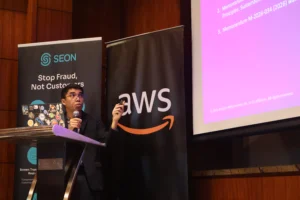
AWS explored how financial institutions can scale AI while addressing data protection, governance, and regulatory expectations.
The discussion emphasized that data sovereignty extends beyond physical data location. It also involves data ownership, access, encryption, lifecycle management, and third-party controls.
The forum highlighted four key areas for responsible AI:
- Governance: Establishing clear accountability for AI development, deployment, and monitoring.
- Data Protection: Applying appropriate controls for sensitive financial and customer data.
- Fairness: Testing AI models for potential bias and unintended outcomes.
- Explainability: Ensuring AI-supported decisions can be understood and appropriately communicated.
Continuous monitoring was also identified as essential. AI governance and security cannot be treated as annual compliance exercises when models, data, and threats are constantly evolving.
↗Know more about our partnership with AWS
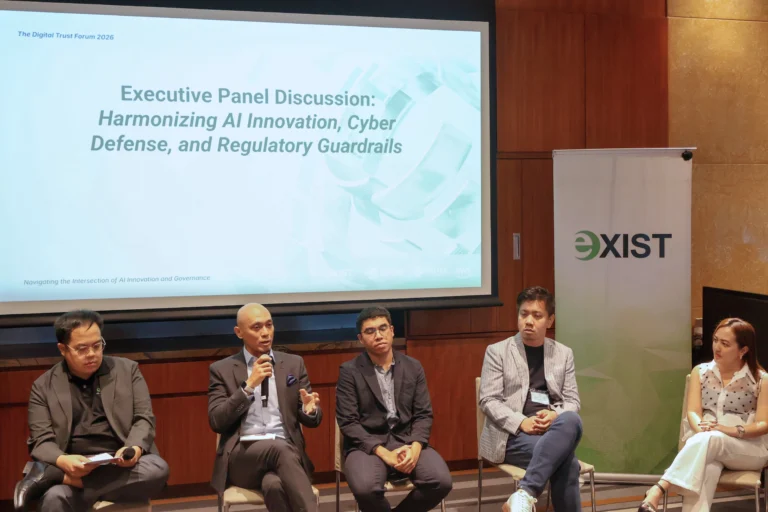
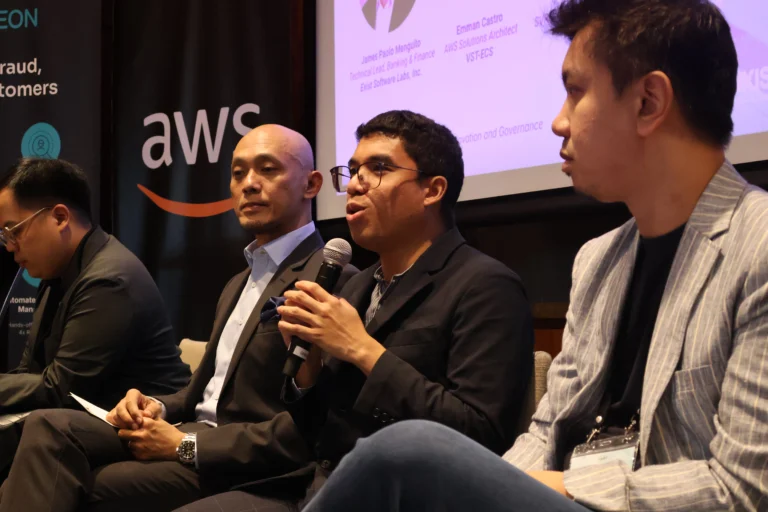
Executive Panel: From Reactive Compliance to Proactive Governance
The forum concluded with an executive panel examining practical challenges facing Philippine financial institutions.



References:
1. Manila Bulletin. (2026). Digital payments hit 64.7% of Philippine retail transactions, nearing BSP's 70% target. Retrieved from: https://mb.com.ph/2026/08/17/digital-payments-hit-647-of-philippine-retail-transactions-nearing-bsps-70-target
2. Daily Tribune. (2026). Digital fraud threatens P603B in annual losses — report. Retrieved from: https://tribune.net.ph/2026/09/23/digital-fraud-threatens-p603b-in-annual-losses-report